
What AI SEO Really Means in 2026
What AI SEO Really Means in 2026
By 2026, AI SEO is no longer an upgrade to traditional SEO—it is SEO.
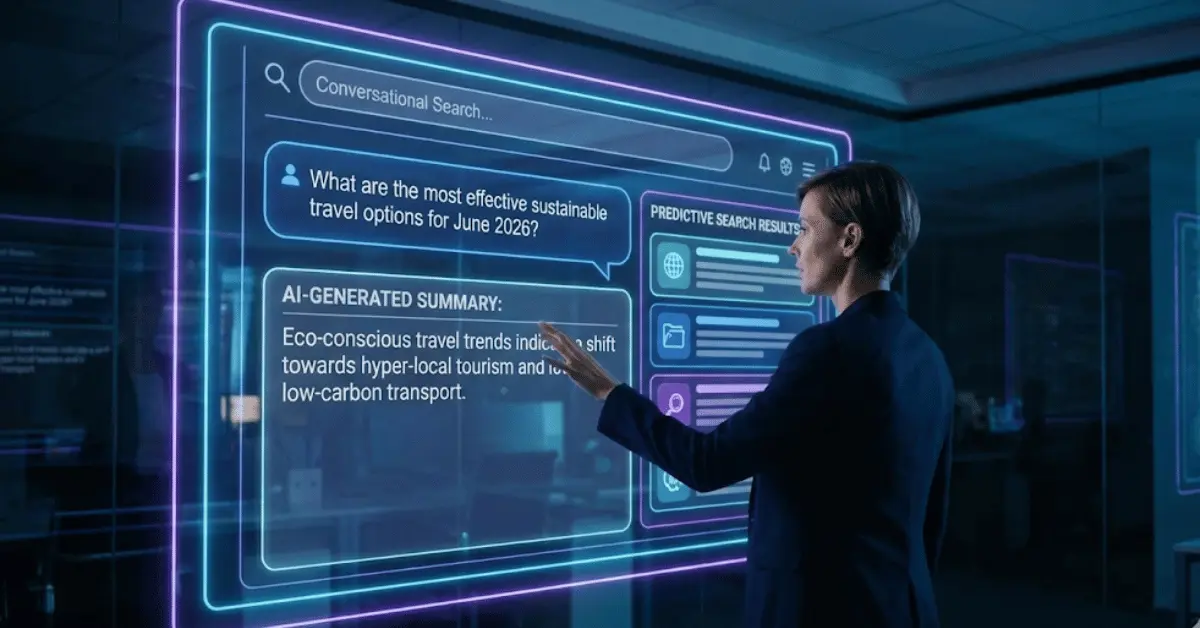
Search engines now behave less like indexes and more like intelligent assistants. They don’t just retrieve pages; they interpret intent, synthesize answers, predict follow-up questions, and decide which brands deserve visibility.
AI SEO in 2026 is about earning trust with machines that think probabilistically, not mechanically.
This shift changes everything—from content creation to technical optimization, measurement, and even branding.
From Ranking Pages to Training AI Understanding
In the past, SEO success meant ranking pages.
In 2026, SEO success means training AI systems to recognize your brand as an authoritative source within a topic space.
Search engines now:
- Generate answers directly
- Cite or summarize trusted sources
- Choose which brands appear in AI snapshots
- Reduce reliance on blue-link rankings
If your content doesn’t teach the AI something useful, it doesn’t get surfaced.
Search Is Now Predictive, Not Reactive
Content Image: Predictive Search Behavior
A visual timeline showing how AI predicts a user’s next questions before they are asked, with branching paths of intent and content recommendations.
AI SEO in 2026 revolves around anticipation.
Modern search engines analyze:
- User history patterns
- Micro-intent signals
- Context across sessions
- Behavioral probabilities
Instead of optimizing for a single query, you optimize for entire decision journeys.
Example:
You don’t just rank for “best running shoes.”
You create content that supports:
- Injury prevention
- Gait analysis
- Shoe lifespan
- Terrain selection
- Training plans
AI SEO rewards depth, continuity, and foresight.
Keywords Are Signals, Not Targets
By 2026, keywords are no longer optimization targets—they are diagnostic signals.
AI models use keywords to:
- Infer topic relevance
- Map semantic coverage
- Detect intent alignment
- Identify content gaps
Optimizing by stuffing keywords is obsolete.
AI SEO means optimizing meaning, not matching phrases.
Successful pages:
- Answer related questions naturally
- Use varied language and concepts
- Demonstrate subject-matter fluency
- Cover edge cases and exceptions
Content Is Evaluated Like Expertise, Not Text
Content Image: AI Evaluating Expertise
An AI system analyzing content for credibility signals such as experience, citations, structure, clarity, and real-world examples, represented visually as trust meters and neural scans.
In 2026, AI SEO aligns closely with experience-based evaluation.
Search engines assess:
- First-hand knowledge
- Demonstrated expertise
- Consistency across content
- Author credibility signals
- Real-world applicability
AI models can now detect:
- Shallow summarization
- Rewritten generic content
- Pattern-based AI spam
- Lack of original insight
Human experience is the differentiator.
AI SEO doesn’t replace humans—it amplifies real expertise.
Technical SEO Becomes Invisible but Critical
Technical SEO still matters—but in a different way.
AI-driven search systems expect:
- Clean, machine-readable structure
- Fast rendering and interaction
- Clear entity relationships
- Strong internal linking logic
- Consistent schema signals
What’s changed is scale and automation.
In 2026:
- AI monitors crawl behavior continuously
- Issues are detected before rankings drop
- Site architecture adapts dynamically
- Content is re-prioritized algorithmically
Technical SEO becomes a self-healing system, not a checklist.
Topical Authority Is the Core Ranking Asset
Content Image: Topical Authority Ecosystem
A brand positioned at the center of a glowing topic ecosystem, with interconnected content nodes radiating authority, trust, and semantic relevance.
AI SEO in 2026 is fundamentally about owning topics, not pages.
Search engines favor brands that:
- Cover a topic comprehensively
- Update content continuously
- Show consistent perspective
- Connect related subtopics logically
Topical authority acts like reputation memory for AI systems.
Once earned, it compounds—making future content rank faster and more reliably.
Personalization Shapes Visibility
AI SEO now operates in a non-universal search environment.
Results vary based on:
- Location
- Device
- Industry context
- Prior behavior
- Stage in the journey
This means:
- Rankings are less absolute
- Visibility is contextual
- Performance must be measured holistically
AI SEO strategies focus on relevance per audience segment, not average position.
Measurement Moves Beyond Rankings
In 2026, rankings alone are a weak KPI.
AI SEO success is measured by:
- Inclusion in AI-generated answers
- Citation frequency
- Engagement depth
- Repeat visibility across journeys
- Brand recall in search experiences
Modern SEO teams track AI exposure, not just clicks.
Being referenced by AI systems—even without a click—still builds authority and future demand.
The AI SEO Mindset in 2026
AI SEO is not about gaming algorithms.
It’s about:
- Teaching machines
- Serving humans
- Building durable authority
- Thinking in systems, not tactics
The winners in 2026 are brands that treat SEO as:
- A knowledge strategy
- A trust-building engine
- A long-term asset
If traditional SEO was about visibility, AI SEO is about credibility.
 Some Question

