
What Actually Works for SEO in 2026
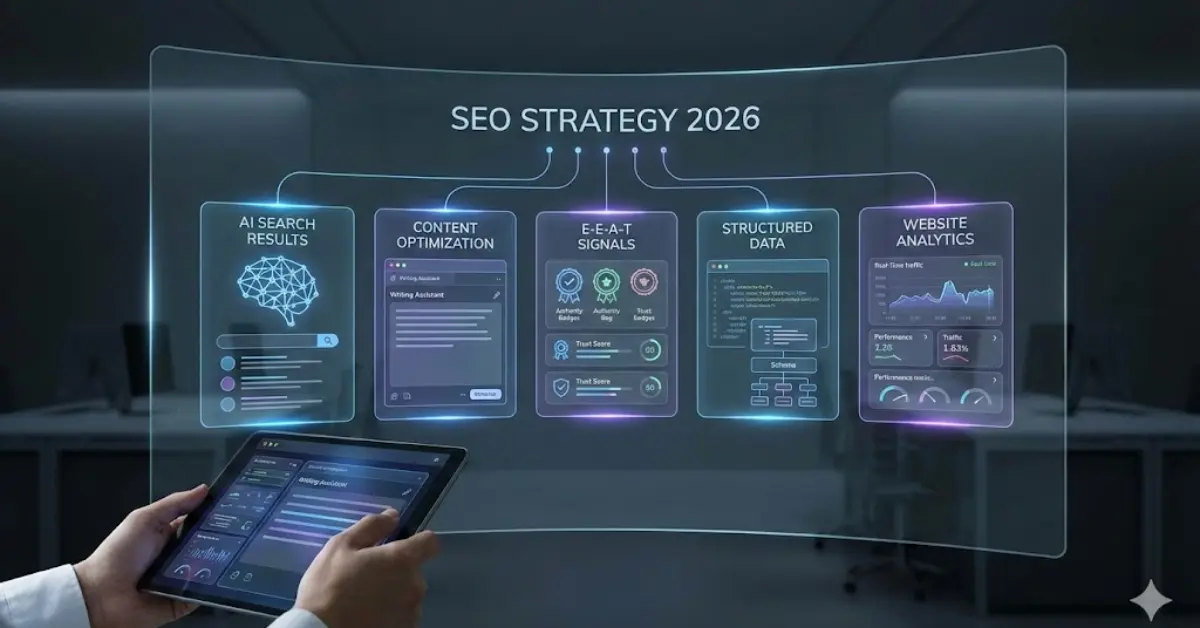
What Actually Works for SEO in 2026 (No Fluff, Just Reality)
SEO in 2026 feels like a foggy battlefield.
Experts contradict each other.
Agencies overcomplicate simple things.
AI search has people shouting “SEO is dead” while still ranking with… SEO.
So let’s clear the air.
This guide is not theory, not recycled Twitter threads, and not agency fluff.
Everything below is curated from real experiments across multiple sites.
What doesn’t work is intentionally left out.
If you apply just the first two tactics and weren’t doing them before, most sites see +6 to +10 position gains on Google for affected pages, depending on competition.
There’s no “new SEO vs old SEO” war here.
In reality, AI SEO and traditional SEO overlap by roughly 80%. The fundamentals still win. The execution just got sharper.
1. Refresh Old Content (The Easiest SEO Win)
This is still the lowest-hanging fruit in SEO.
Go to Google Search Console and filter pages ranking in positions 8–20.
These pages are close to traffic but invisible on page two.
What to do:
- Add a new section or expand an existing one
- Update outdated stats, examples, screenshots
- Rewrite the intro for clarity and intent match
- Update the published or “last updated” date
Why it works:
Google already trusts these URLs. You’re just giving them a relevance nudge.
Result:
Pages often jump 5–10+ positions within weeks.
2. Add Real Authors to Blog Posts (E-E-A-T Booster)
Google doesn’t just rank content.
It evaluates who wrote it.
Add:
- A visible author name
- A short bio (experience + credibility)
- A link to LinkedIn, X, or a personal site
This aligns directly with E-E-A-T (Experience, Expertise, Authoritativeness, Trust).
Across multiple sites, simply adding authors to anonymous posts resulted in 4–8 position gains within ~2 weeks.
Simple. Underused. Powerful.
3. Get Listed on Partner & Integration Marketplaces
If your product integrates with other platforms, this is free authority.
Examples:
- Integration marketplaces
- Plugin directories
- Extension stores
- SaaS partner listings
These links are:
- High authority (often DA 80–90+)
- Editorially trusted
- Traffic-driving, not just SEO signals
Bonus: these users actually convert.
4. Exact-Match Domains Still Help (When Done Right)
Exact-match domains were nerfed, not killed.
They still provide an edge when combined with:
- High-quality content
- Clean site structure
- Real topical authority
If you’re starting a new site, spending an extra hour finding a domain with your primary keyword can give you a noticeable early lift.
Not a magic bullet. Still useful.
5. Build One Free Tool
People love linking to tools.
It doesn’t need to be complex:
- Calculator
- Checker
- Generator
- Converter
One simple tool can:
- Earn backlinks for years
- Drive direct traffic
- Build topical authority
A basic utility that takes seconds to use often outperforms “ultimate guides” in links.
6. Publish Fresh Content Consistently
Google rewards activity.
Regular publishing signals:
- The site is alive
- New URLs deserve crawling
- More entry points for search
You don’t need daily posts.
You need predictable consistency.
7. Find Keyword Gaps (Not Just Competitor Copies)
Everyone copies competitors.
Smart sites look for what competitors missed.
Tactics:
- Weakly covered keywords
- Poorly structured pages ranking anyway
- Long-tail queries with intent
One overlooked keyword can drive 80% of total traffic on niche sites.
Low competition beats high volume every time.
8. NAP Consistency (Brand Trust Signal)
Your:
- Brand name
- Website URL
- Social links
Must match everywhere:
- Google Business Profile
- Crunchbase
- X
- Directories
Consistency builds confidence.
Inconsistency creates doubt.
This matters more for AI-driven trust evaluation than ever before.
9. Only Use Curated Directories
If anyone can submit for free, it’s mostly noise.
What works:
- Curated platforms
- Review-based directories
- Industry-specific listings
- Paid or vetted submissions
These pass real trust, not just links.
10. Programmatic SEO (With Authority First)
One template + structured data = scale.
Examples:
- Location pages
- Comparison pages
- Integration pages
- Long-tail variations
But there’s a rule:
Programmatic SEO only works if your site already has authority.
No backlinks = no rankings.
11. FAQ Sections (Critical for AI Search)
FAQs are no longer optional.
They help with:
- Long-tail keyword coverage
- Rich snippets
- Higher CTR
- AI search responses
AI systems break queries into sub-questions.
Well-formatted Q&A content fits perfectly into that model.
12. Backlink Outreach Still Works
Yes, cold outreach still works in 2026.
What works best:
- Guest posts
- Broken link replacement
- Unlinked brand mentions
What to avoid at scale:
- Direct reciprocal linking (A ↔ B)
Google detects patterns easily.
Triangular or contextual linking structures are safer.
13. Comparison Pages (Bottom-of-Funnel Gold)
Searches like:
- “[Competitor] alternatives”
- “[Competitor] vs [Your Brand]”
These users are ready to buy.
Be honest:
- Admit weaknesses
- Highlight strengths
- Explain who you’re best for
Trust converts better than hype.
14. Schema Markup That Actually Matters
Skip the fluff. Focus on:
- Person / Author schema
- FAQPage schema
- SameAs schema
These help Google and AI systems:
- Understand who you are
- Trust your content
- Connect your brand across the web
Final Reality Check
SEO in 2026 is not dead.
It’s less forgiving and more honest.
If you:
- Improve existing content
- Attach real humans to your work
- Build trust signals
- Structure content for AI and humans
You will get more organic traffic within 3 months, assuming patience and consistency.
No hacks. Just execution.
 Some Question

