
AI Search: Boost E-commerce Feed Visibility
AI's Impact on E-commerce: Why Product Feeds Matter
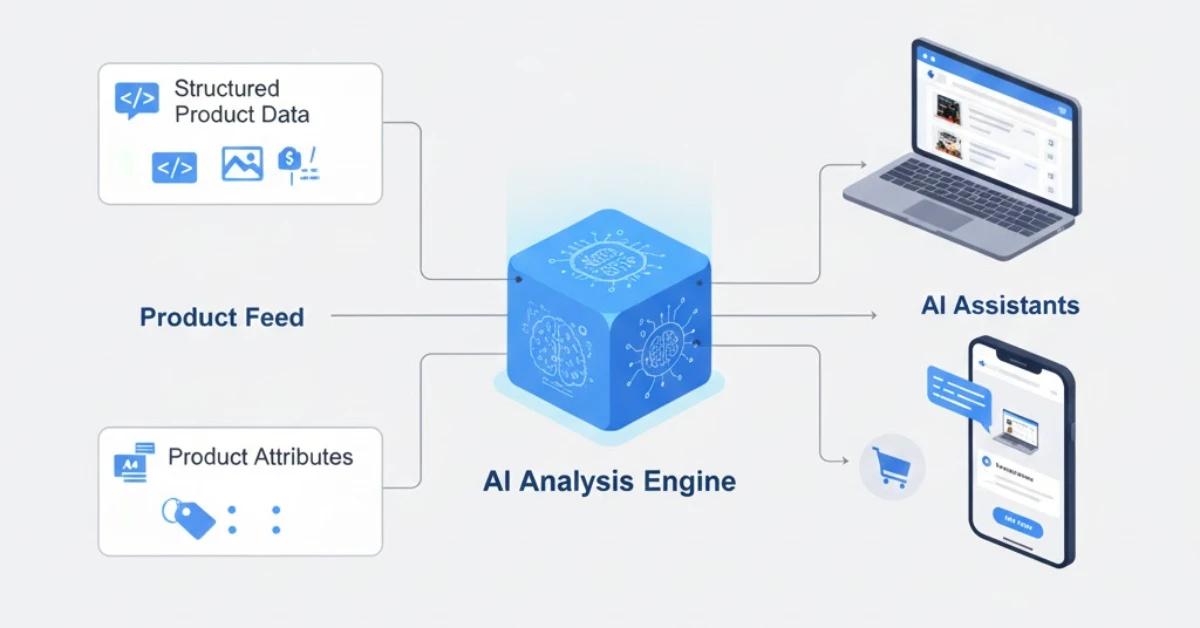
AI is fundamentally reshaping the online shopping experience. The traditional keyword-based search is evolving, with tools like Google's AI Overviews, ChatGPT shopping features, and Perplexity product recommendations utilizing vast amounts of product data to present users with relevant options. This shift necessitates that e-commerce brands re-evaluate how their product information is structured and presented.
To ensure visibility in these AI-powered shopping journeys, product data must be comprehensive, accurate, and enriched. AI models rely heavily on structured feeds, reputable marketplaces, and detailed product attributes to accurately understand your offerings. Optimizing product feeds is now crucial for appearing in conversational queries, comparison results, and visual search responses.
Key Takeaways
- AI search engines prioritize structured product feed data over simple site content for product understanding and surfacing.
- Clean, complete feeds enhance visibility across platforms like Google Shopping, ChatGPT, and Perplexity.
- Detailed titles, enriched attributes, and high-quality images improve the accuracy of AI systems in matching products to user needs.
- Brands with clear, structured product data will gain a competitive edge in AI-driven shopping environments.
How AI is Transforming Product Discovery

AI is influencing customer product discovery long before they reach a website. Shoppers are increasingly using natural language queries to describe their needs, such as "lightweight waterproof hiking boots," "a gift for a 12-year-old who loves science," or "a mid-century floor lamp under $150." AI systems interpret these queries using semantic understanding, impacting rankings in Google Shopping, ChatGPT, and other AI-driven platforms.
The connection between product data and AI visibility is becoming increasingly important. AI models depend on structured and reliable data sources, including product feeds, schema markup, and marketplace listings. Insufficient attributes or lack of clarity can prevent AI from connecting your product to a user's need, even if your website has strong content.
Optimizing product feeds is not just a backend task; it's now a core visibility strategy.
Understanding Product Feeds
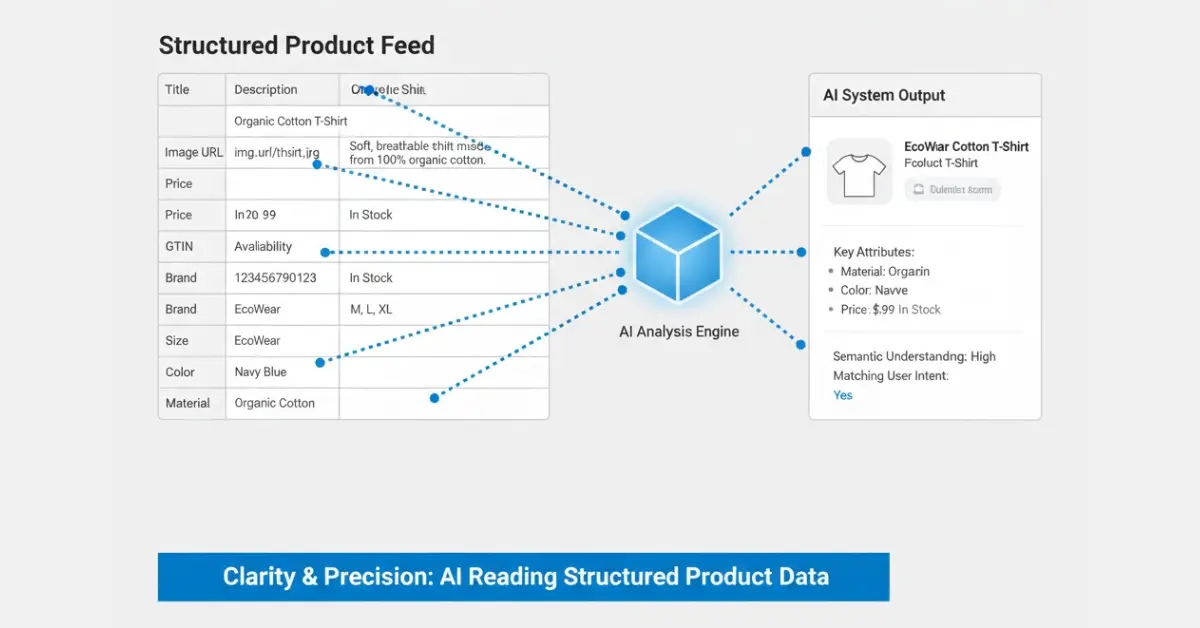
A product feed is a structured data file containing comprehensive details about each product. This includes attributes like product title, description, brand, size, color, price, availability, GTIN, and more. Platforms such as Google Shopping, Meta, Amazon, and TikTok Shops rely on these feeds to understand inventory and display relevant products.
AI systems use this structured data to extract product details efficiently, facilitating accurate and scalable interpretation. Rich attributes within the feed allow AI to match products to complex user queries. Conversely, missing or vague attributes can render products invisible in AI-driven discovery.
Essential Elements for AI Product Feeds
AI systems analyze the data you provide to understand your products. These elements are crucial:
Titles and Descriptions
AI models prefer descriptive, natural-sounding titles. Instead of vague titles like "Running Shoes," use detailed titles such as "Women’s Waterproof Trail Running Shoes – Lightweight, Breathable, Blue." Descriptions should expand on the title, providing details about use cases, materials, and fit.
Avoid keyword stuffing to improve AI understanding and user experience.
Product Attributes
AI relies heavily on structured attributes, including:
- Size
- Color
- Material
- Fit
- Style
- GTIN/MPN
- Age range
- Intended use
Complete attributes increase the likelihood of appearing in filtered results when users specify preferences like "Show me a size 8" or "Only vegan options."
Product Images and Alt Text
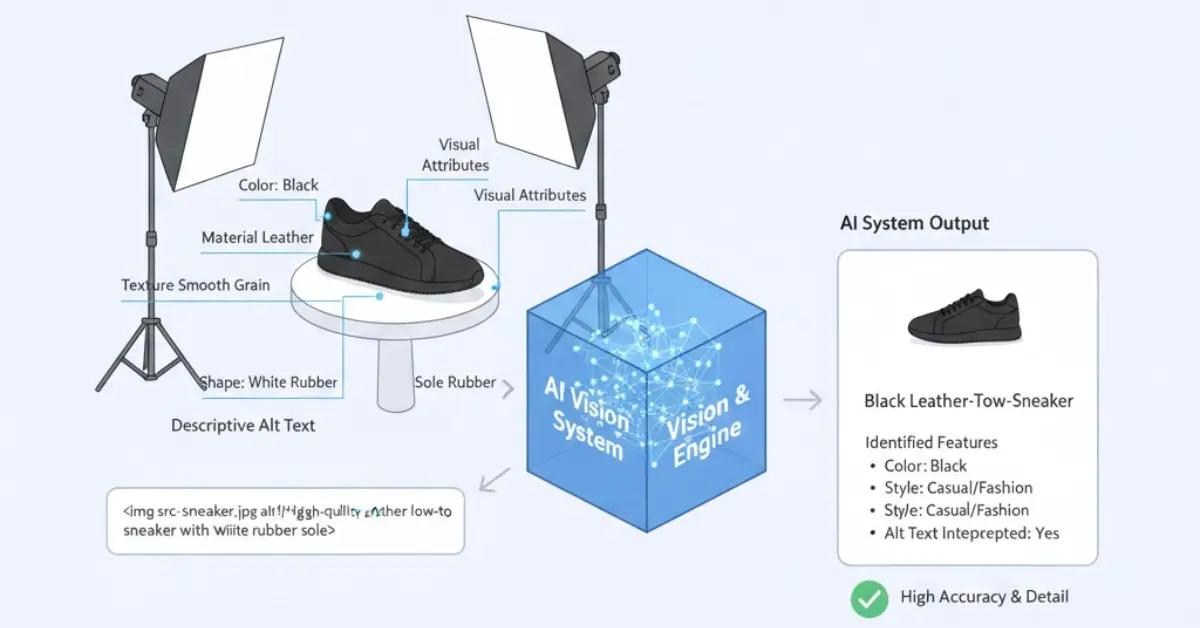
AI uses vision models to "read" images, analyzing colors, textures, shapes, and packaging. High-resolution images with descriptive alt text provide both visual interpretation and descriptive language.
Example alt text: "Women’s waterproof trail running shoe with rubber sole, breathable mesh upper, and reinforced toe cap in blue."
Steps to Optimize Product Feeds
- Audit Your Current Product Feed: Use tools like Google Merchant Center, Feedonomics, or GoDataFeed to identify missing GTINs, weak titles, incomplete attributes, duplicate listings, mismatched availability, blank fields, or generic descriptions.
- Improve Title and Description Relevance: Use a clear structure like Brand + Category + Key Attributes + Value Proposition. For example: "Nike Men’s Running Shoes – Cushioned, Lightweight, Black."
- Enhance Structured Attributes: Complete every available attribute, including optional ones, to cater to specific user needs. Add custom labels for best sellers, seasonal items, and new arrivals.
- Optimize for Rich Results & Visual Search: Include product schema markup on all product pages for Product, Review, Price, and Availability. Also include descriptive alt text on all product images.
- Set Up Feed Rules and Automations: Automate cleanup tasks such as adding missing colors to titles, standardizing capitalization, and flagging products with incomplete data.
How AI Assistants Use Product Data
AI shopping assistants quickly recommend products based on attributes like size, color, performance, ratings, and price. This information is sourced directly from your feed and structured product data.
To provide accurate recommendations, AI systems pull from:
- Merchant Center feeds
- Structured schema markup
- Marketplace listings
- Verified product databases
- High-quality product images
Brands with richer datasets experience higher inclusion rates in comparison lists, "top choices" summaries, product match queries, visual search results, and conversational shopping recommendations.
Common Mistakes That Hurt AI Visibility
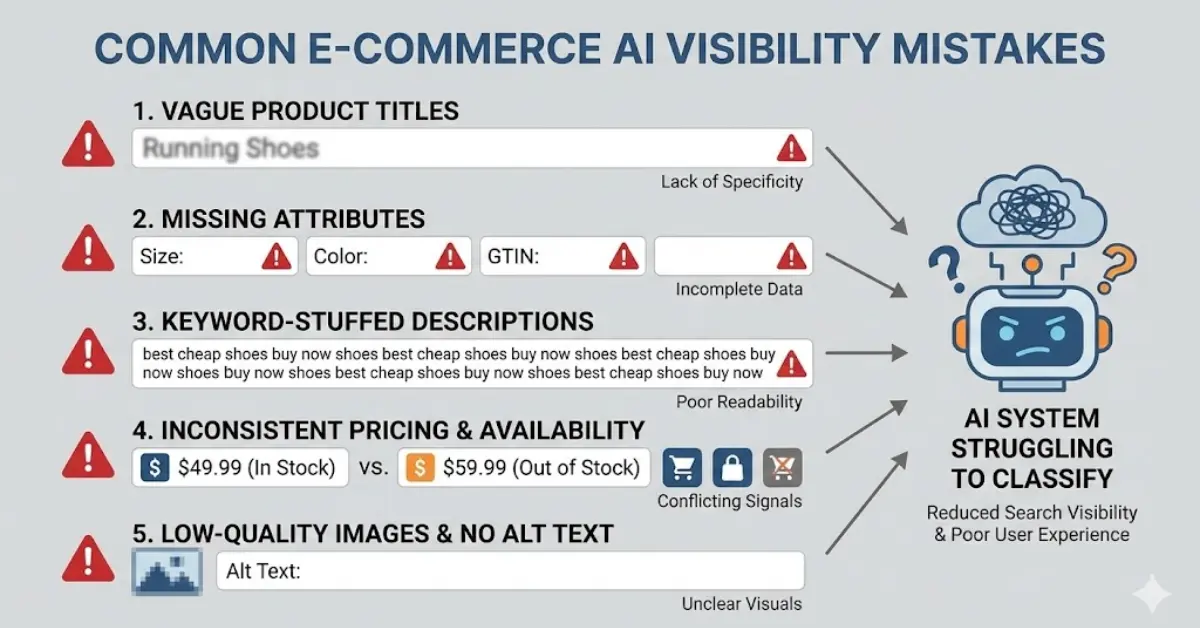
- Vague or Duplicated Titles: Titles lacking context are deprioritized.
- Missing Key Attributes: Skipping fields like size, color, and GTIN limits AI matching capabilities.
- Keyword-Stuffed or Fluffy Descriptions: Focus on informative phrasing over repetitive keywords.
- Inconsistent Pricing or Availability: Inconsistencies reduce visibility.
- Low-Quality Images or Missing Alt Text: Poor visuals hinder AI classification.
FAQ
| Question | Answer |
|---|---|
| What is AI e-commerce? | AI e-commerce uses artificial intelligence to improve product discovery, recommendations, personalization, and automation throughout the online shopping experience. |
| How is AI changing e-commerce? | AI is shifting product discovery toward natural-language search, visual identification, and conversational shopping assistants. Brands now need structured, enriched product data to stay visible. |
| How do you optimize a product feed for AI search? | Create clear titles, use complete attributes, include schema markup, strengthen product images, and use automation to maintain consistency. A detailed feed helps AI understand your products accurately. |
Conclusion
Investing in structured data, enriched attributes, and clear product information will help brands thrive as AI-driven shopping continues to grow. Feed optimization strengthens search strategies and enables conversational systems to recommend products more confidently. Ultimately, data quality drives visibility in AI search.
Explore over 200+ online tools on MATSEOTOOLS to enhance your digital strategies. We offer a comprehensive suite of tools for SEO, Development, Text, Image, PDF, CSV management, and Conversions/Calculations. Start optimizing today!
 Some Question

