
What SEO Means in 2026?
-
What Does SEO Mean in 2026?
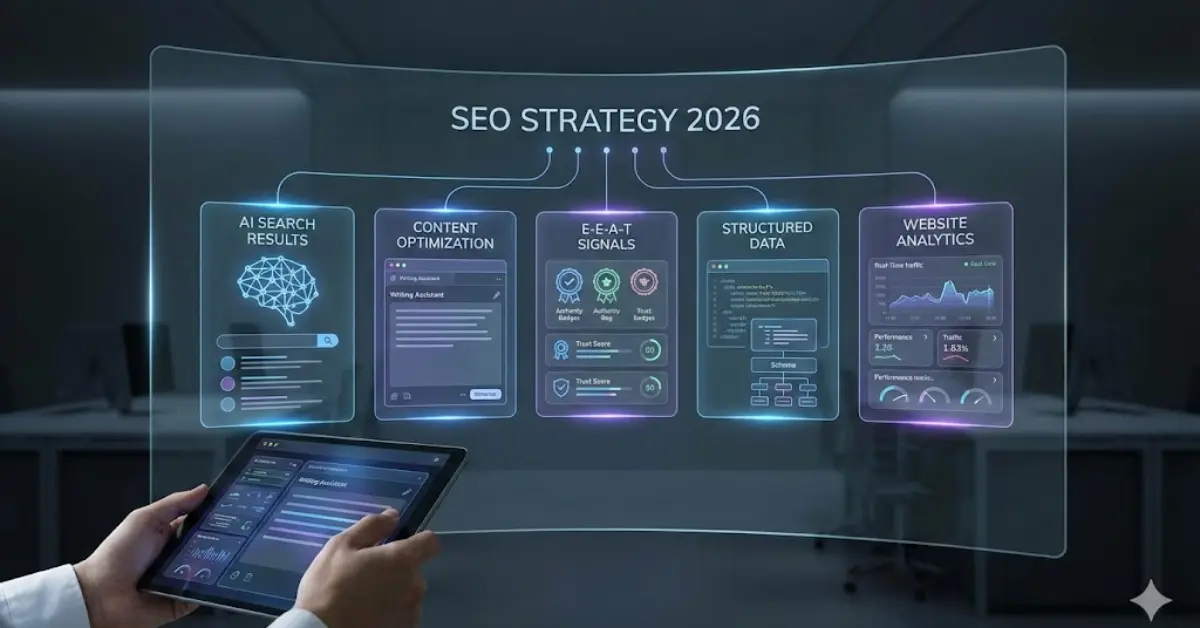
SEO in 2026 no longer means “ranking for keywords.” It means earning relevance, trust, and usefulness in an AI-mediated search ecosystem.
Search Engine Optimization has evolved into something broader and more human-focused: Search Experience Optimization. While the acronym stayed the same, the practice transformed entirely. Algorithms are smarter, users are more demanding, and content is judged less by technical tricks and more by whether it genuinely helps someone accomplish a goal.
To understand SEO in 2026, you have to stop thinking like a marketer trying to “game Google” and start thinking like a publisher, educator, and product designer rolled into one.
From Keywords to Intent: The Core Shift
In the early days, SEO revolved around keyword density, backlinks, and metadata. By the early 2020s, intent-based optimization took over. In 2026, intent is everything.
Search engines—led by Google and its AI-driven systems—now interpret:
- Why a user is searching
- What outcome they want
- How satisfied they are with the result
This means ranking well requires answering questions completely, not just quickly.
For example:
- A search for “best running shoes” may surface comparisons, biomechanical advice, user reviews, and even injury-prevention insights.
- A query like “how to fix a slow website” rewards content that explains causes, solutions, tools, and trade-offs—not just a list of tips.
SEO in 2026 prioritizes depth over density.
AI Search Has Redefined Visibility
AI-powered search summaries, conversational results, and multimodal answers are now standard. Users often get answers without clicking—yet SEO still matters.
Why? Because AI systems pull from trusted, authoritative sources.
If your content is:
- Original
- Well-structured
- Expert-driven
- Frequently referenced
…it becomes part of the AI’s “knowledge base.”
In 2026, SEO success often looks like:
- Being cited in AI-generated answers
- Appearing as the recommended source
- Owning follow-up conversational queries
This is sometimes called “zero-click SEO”, but it still drives brand authority, downstream traffic, and conversions.
Experience Is the New Ranking Factor
Google’s ranking systems now heavily weight real user experience signals, including:
- Engagement time
- Scroll depth
- Interaction behavior
- Content satisfaction
A fast-loading site is no longer enough. SEO in 2026 demands:
- Clear structure
- Visual breathing room
- Helpful formatting
- Logical progression of ideas
Think less “article” and more guided experience.
E-E-A-T Is Now Non-Negotiable
Experience, Expertise, Authoritativeness, and Trustworthiness (E-E-A-T) moved from a guideline to a core requirement.
In 2026, search engines assess:
- Who created the content
- Whether they have real-world experience
- How transparent the site is
- If claims are supported
This is especially critical in:
- Health
- Finance
- Legal
- Education
- Product reviews
Anonymous, shallow content struggles to survive. Personal insights, case studies, and lived experience now outperform generic summaries.
SEO Is Multi-Platform, Not Just Google
Search behavior fragmented.
People search on:
- Traditional search engines
- Voice assistants
- AI chat interfaces
- Video platforms
- Marketplaces
SEO in 2026 means optimizing for discovery everywhere, not just blue links.
Examples:
- Structuring content so it’s easily read aloud by voice assistants
- Creating video summaries that rank in visual search
- Using schema so AI systems can parse context
The question is no longer “How do I rank on Google?” but “How do people discover answers now?”
Content Quality Beats Content Quantity
Publishing daily no longer guarantees growth.
In 2026:
- One exceptional resource can outperform 100 thin posts
- Updating existing content often beats publishing new
- Evergreen relevance matters more than trends
The most successful SEO strategies focus on:
- Topic authority clusters
- Deep, interconnected resources
- Consistent content refreshing
SEO is now closer to digital publishing than marketing.
Technical SEO Still Matters—But It’s Invisible
Technical SEO hasn’t disappeared. It’s just assumed.
If your site isn’t:
- Fast
- Secure
- Mobile-optimized
- Crawlable
…you’re not competing.
But once those basics are met, technical tweaks alone won’t move the needle. Content usefulness and experience take over.
What SEO Really Means in 2026 (In One Sentence)
SEO in 2026 means creating genuinely helpful, experience-driven content that AI systems trust and users value—across every place they search.
It’s less about algorithms and more about alignment:
- With human intent
- With real expertise
- With meaningful outcomes
The brands winning at SEO aren’t optimizing for search engines—they’re building resources search engines want to recommend.
Main Image Prompt (Featured Image)
A modern illustration of AI-powered search in 2026, showing a human user interacting with a holographic search interface, blending keywords, voice search, and visual results in a clean, futuristic design.
Content Image Prompts
- Diagram showing the evolution of SEO from keywords to intent and experience
- Illustration of AI summarizing content from trusted websites
- User journey visualization highlighting engagement and satisfaction signals
- Why a user is searching


