
LLM Local SEO: Evolving Best Practices
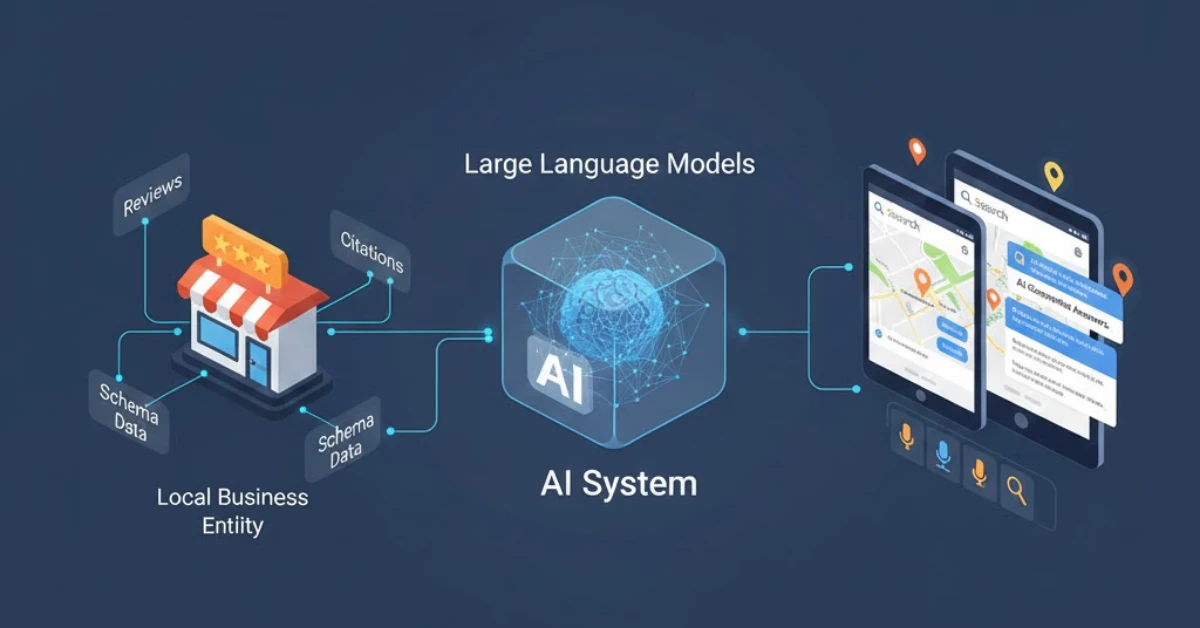
How Large Language Models Are Reshaping Local SEO
Large language models (LLMs) like ChatGPT, Perplexity, and Google’s AI Overviews are transforming how customers discover local businesses. Unlike traditional search engines that primarily crawl websites, LLMs interpret language, understand context, and synthesize a business's identity from various online sources. If your local online visibility feels less consistent than before, this shift is likely a significant reason.
While traditional local SEO practices such as Google Business Profile optimization, NAP (Name, Address, Phone number) consistency, and review generation remain important, the focus now extends to optimizing for AI models. These models require more context and structured information to accurately represent your business. Without these elements, you risk fading from LLM-generated answers, even if your standard search rankings appear stable.
Key Aspects of LLM's Impact on Local Search
- LLMs generate answers: Instead of just listing choices like traditional search results, LLMs synthesize information to provide direct answers.
- Consistency is key: Consistent business information across the web assures AI models of your legitimacy, increasing the likelihood of inclusion in their answers.
- Contextual signals matter: Reviews, citations, structured data, and natural-language content provide the context LLMs need to understand what you do and who you serve.
- Traditional SEO is foundational: While traditional SEO still drives visibility, AI demands deeper clarity and stronger contextual signals.
- Entity strength is crucial: Improving your entity strength helps you appear more frequently in both organic search results and AI-generated summaries.
How LLMs Process Local Intent
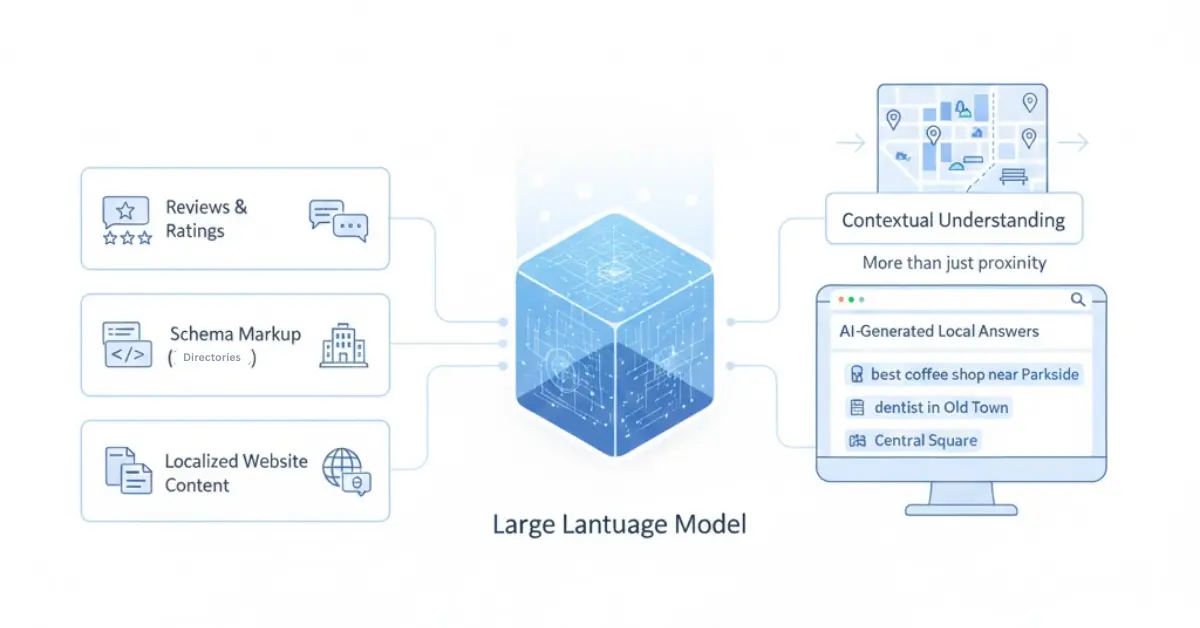
LLMs differ from traditional search algorithms in how they determine local relevance. They infer this from patterns in language and structured signals, rather than relying solely on proximity. Here's what they look for:
- Reviews: Mentions of service areas, neighborhoods, and staff names within customer reviews.
- Schema Markup: Structured data defining your business type and location.
- Local Mentions: Citations across directories, social media platforms, and local news sites.
- Localized Content: Content that directly addresses questions and concerns specific to your city or neighborhood.
LLMs absorb customer feedback, structured data, and content that references local conditions. This is important because LLMs don't depend on GPS or IP addresses at the time of search like Google does. They rely on explicit mentions and conversational context to establish relevance.
Why Local SEO Remains Crucial
Local SEO remains foundational because LLMs still rely on data from Google Business Profiles, reviews, NAP citations, and on-site content to understand your business. These elements provide the contextual basis that AI needs. The most significant change is the increased level of consistency now required.
If your business description varies across platforms or your NAP details are inconsistent, AI models detect uncertainty. This uncertainty can prevent you from appearing in high-value generative answers. For branded queries, a lack of detail can lead to outdated or incorrect information about your business being provided.
Local SEO offers structure and stability, while AI presents new visibility opportunities. Both are essential and mutually beneficial when implemented correctly.
Best Practices for Localized SEO in the Age of LLMs
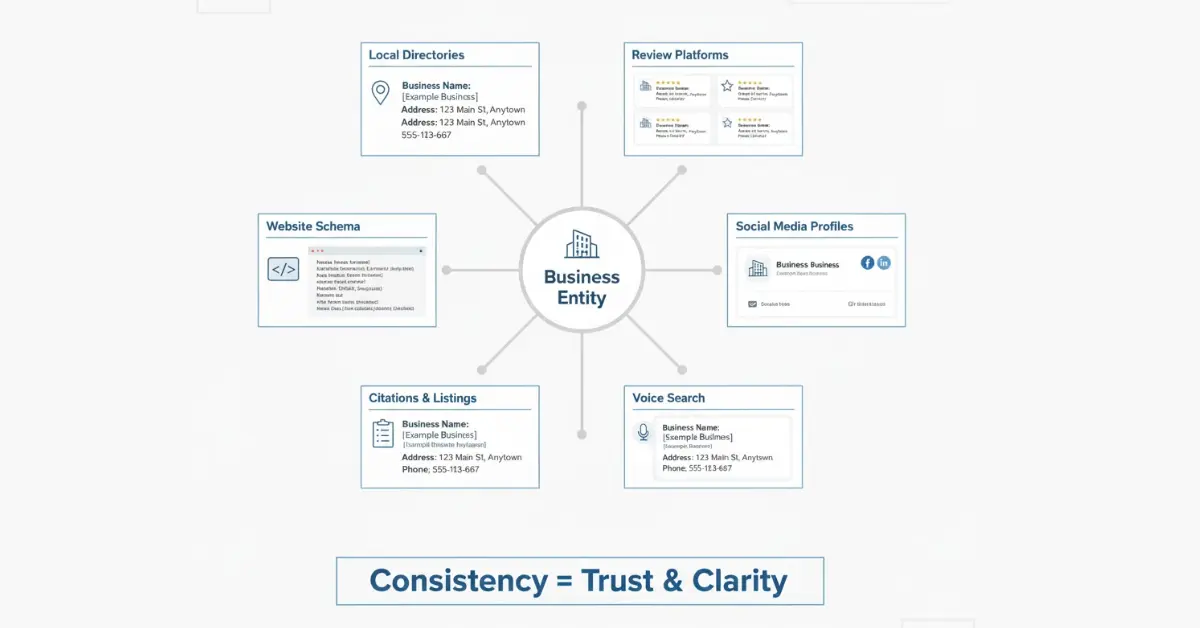
To improve your visibility in both search engines and AI-generated results, your strategy must emphasize clarity, context, and entity-level consistency. These practices will help LLMs understand your business and its role in local conversations:
- Focus on Specific Audience Needs: Develop content that directly addresses the unique needs and challenges of your target areas.
- Structure Content for LLMs: Use clear headers, short sections, FAQs, and language that mirrors how people ask questions.
- Emphasize Localized E-E-A-T: Strengthen your Experience, Expertise, Authoritativeness, and Trustworthiness by including case studies, expert commentary, author bios, and community involvement details.
- Utilize Entity-Based Markup: Implement schema markup to clearly communicate your business identity, service areas, and attributes.
- Standardize Your Online Brand Presence: Ensure consistency in your name, address, phone number, hours, and business description across all online platforms.
- Use Localized Content Styles: Create comparison guides, cost breakdowns, neighborhood-specific FAQs, and troubleshooting guides.
- Internal Linking Matters: Connect service pages to location pages, blog posts to relevant services, and local FAQs to broader category content.
Tracking Results in the LLM Era
While rankings remain important, they no longer provide a complete picture of your visibility. Monitor these metrics to understand your AI visibility:
- Branded search growth
- Google Search Console impressions
- Referral traffic from AI tools
- Increases in unlinked brand mentions
- Review volume and language trends
The goal is to determine if LLMs are including your business in their summaries, even if clicks don't occur. As zero-click results become more common, these metrics are increasingly important.
Frequently Asked Questions
| Question | Answer |
|---|---|
| What is local SEO for LLMs? | It’s the process of optimizing your business so LLMs can recognize and surface you for local queries. |
| How do I optimize my listings for AI-generated results? | Start with accurate NAP data, strong schema, and content written in natural language that reflects how locals ask questions. |
| What signals do LLMs use to determine local relevance? | Entities, schema markup, citations, review language, and contextual signals such as landmarks or neighborhoods. |
| Do reviews impact LLM-driven searches? | Yes. The language inside reviews helps AI understand your services and your location. |
LLMs are changing the landscape of local discovery, but a robust local SEO strategy continues to provide the signals these models rely on. A clear entity, consistent citations, and content that addresses the real needs of your community will ensure AI systems can confidently understand and recommend your business.
These principles form the foundation of effective LLM SEO and modern local SEO. Strengthening your entity, refining your citations, and creating content grounded in local intent will improve your visibility across organic rankings, map results, and AI-generated answers.
Ready to supercharge your online presence? Explore over 200+ free online tools available on MATSEOTOOLS! We offer a comprehensive suite of SEO, Dev, Text, Image, PDF, CSV, and Conversion/Calculator tools to help you optimize every aspect of your digital strategy.
 Some Question

